
Types of Household Mold in Orange, CA Homes, How Each Looks and What It Means for Mold Remediation
Types of household mold are named two ways, by genus on a lab report and by color on a surface. This guide for homeowners in Orange, CA covers 29 types. The 29 are 18 genera, led by Stachybotrys chartarum and Aspergillus, and 11 color or texture names. Every type follows one mold remediation process, according to CDC, so stop the moisture source and call an independent local provider.
Call to be connected with an independent local provider (000) 000-0000Independent local providers. This site is a referral service.
This site is a free service to assist homeowners in connecting with local service contractors. All contractors are independent and this site does not warrant or guarantee any work performed. It is the responsibility of the homeowner to verify that the hired contractor furnishes the necessary license and insurance required for the work being performed. All persons depicted in a photo or video are actors or models and not contractors listed on this site.
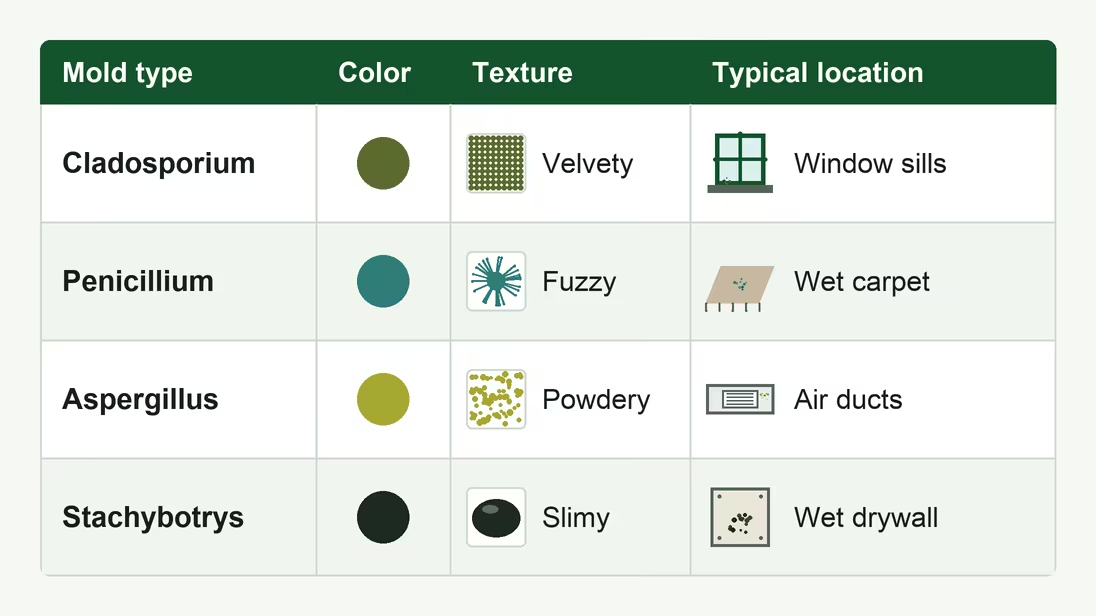
What Are the Common Types of Household Mold?
Household mold types are the genera of mold that grow indoors on damp materials. CDC names Cladosporium, Penicillium and Aspergillus as the most common indoor molds. The color of a mold is a second, looser way homeowners name it.
Each of the three has its own section further down the page.
- Cladosporium
- Penicillium
- Aspergillus
The chart at the top of this page and the sections below cover 18 genera and 11 color or texture names. The next question is whether the type changes the removal work.
Source: CDC Mold (link), checked 2026-10-15.
How Does the Type of Mold Change Mold Remediation?
The type of mold is the genus a lab names or the color seen on a surface. The type of mold does not change mold remediation, according to CDC. CDC says all molds should be treated the same for removal. The size of the moldy area is what changes the work. EPA guidance usually treats an area under about 10 square feet (about 3 feet by 3 feet) as a homeowner job.
An independent local provider follows one set of steps: stop the moisture source, contain, remove or clean, dry, verify. The mold remediation process steps follow one order for every type. That order is the same for a homeowner who calls about mold remediation in Orange, CA. The cards below name each genus and what, if anything, differs in its removal.
Source: CDC Facts About Stachybotrys chartarum (link) and EPA Mold Cleanup in Your Home (link), checked 2026-10-15.
Which Mold Genera Grow in Homes?
A mold genus is a group of related species that a lab names from a sample. This page lists 18 genera, 4 in the cards below and 14 by name in the list after them. Stachybotrys chartarum comes first among the cards because homeowners call it black mold.
What Is Stachybotrys chartarum Mold?
- What it is
- Stachybotrys chartarum is a greenish-black mold, according to CDC. It grows on high-cellulose material such as fiberboard, gypsum board and paper. Constant moisture is required for its growth. Stachybotrys chartarum is the mold most often called black mold, and EPA treats black mold as a label, not a species.
- Removal
- CDC says all molds are treated the same way for removal. Agency statements on the black mold label are collected under black mold agency guidance.
What Is Aspergillus Mold?
- What it is
- Aspergillus is one of the three most common indoor molds, according to CDC. Aspergillus spores are common in indoor and outdoor environments.
- Removal
- Aspergillus growth is removed with the same steps as every other mold, according to CDC.
What Is Penicillium Mold?
- What it is
- Penicillium is a genus of mold that CDC lists among the most common indoor molds. Penicillium grows on damp indoor materials such as paper, wood or drywall, the materials CDC names for mold in general.
- Removal
- Penicillium removal uses the same cleanup steps that CDC gives for all molds.
What Is Cladosporium Mold?
- What it is
- Cladosporium is the first genus in the CDC list of the most common indoor molds. Cladosporium needs moisture to grow, such as a leak around a roof, window or pipe, according to CDC.
- Removal
- Cladosporium removal uses the same steps as for every other mold, according to CDC.
Which Other Mold Genera Can a Lab Report Name?
A lab report can name any of the 14 other mold genera listed below.
- Alternaria
- Chaetomium
- Fusarium
- Mucor
- Aureobasidium
- Trichoderma
- Ulocladium
- Memnoniella
- Acremonium
- Wallemia
- Curvularia
- Epicoccum
- Paecilomyces
- Rhizopus
CDC gives one cleanup process for every mold, so the removal steps are the same for each genus listed.
What Do Mold Colors Mean?
Mold color is the shade a colony shows on a surface, and it does not identify the mold. Molds can be any color, including white, orange, green, brown or black, according to CDPH. Any mold indoors is a problem, whether it is black, red or green, says the Minnesota Department of Health. The color cards below start with white.
What Is White Mold?
- What it is
- White mold is mold whose colonies look white on a surface. Molds come in many colors including white, according to EPA.
- Removal
- White mold takes every mold's removal steps (CDC), set out in a guide to remove white mold from household surfaces.
What Is Green Mold?
- What it is
- Green mold is mold that shows a green shade on the surface it grows on. Green is one of the colors CDPH lists for indoor molds. Looking at a green mold does not tell whether it is producing mycotoxins, according to EPA.
- Removal
- Green mold takes the same removal steps as every mold, according to CDC.
What Is Pink Mold?
- What it is
- Pink mold is the common name for pink or red growth in tubs, sinks and toilets. That pink or red slime is usually the bacterium Serratia marcescens, according to NDSU Extension. Serratia marcescens feeds on soap scum and other fatty or phosphorus residue.
- Removal
- A chlorine bleach cleanser removes the pink film, and wiping surfaces dry slows its return, according to NDSU Extension. Pink mold removal differs because the growth is a bacterium, not a mold.
What Is Orange Mold?
- What it is
- Orange mold is mold or a mold-like growth with an orange color. The name comes from the color, not the city. Orange is one of the colors CDPH lists for molds indoors. Outdoors, bright yellow to red growth on mulch in humid weather is often a slime mold. Slime mold is not a true fungus, according to Texas A and M.
- Removal
- Indoor orange growth is removed with the same steps as every mold, according to CDC.
What Is Yellow Mold?
- What it is
- Yellow mold is yellow growth on a damp surface. Bright yellow growth on irrigated mulch beds is usually slime mold. Texas A and M says slime mold is not known to harm people or animals.
- Removal
- Outdoors, less surface wetness from irrigation lets the growth dry out, according to Texas A and M. Indoors, yellow growth takes the same removal steps as every mold, per CDC.
What Is Brown Mold?
- What it is
- Brown mold is mold whose colonies look brown. Brown appears in the color lists of CDPH and the Minnesota Department of Health, and neither list ties brown to one genus.
- Removal
- Brown mold is cleaned up with the same steps CDC gives for every mold.
What Is Gray Mold?
- What it is
- Gray mold is mold with a gray color on the surface. Gray is one of the shades the Minnesota Department of Health lists for indoor mold.
- Removal
- Removing gray mold takes the same steps as removing any mold, according to CDC.
What Is Blue Mold?
- What it is
- Blue mold is mold with a blue or blue-green tint. CDC says mold can look like spots of many different colors, so the tint names no genus.
- Removal
- Blue mold follows the same removal steps as every mold, according to CDC.
What Is Red Mold?
- What it is
- Red mold is red growth that is either mold or bacteria. Red slime in tubs, sinks and toilets is usually Serratia marcescens, a bacterium, according to NDSU Extension. Red growth on a wall or ceiling is treated as mold, because Minnesota health officials call any indoor mold a problem.
- Removal
- Red bathroom film is cleaned like the pink film, per NDSU Extension. Red mold growth on a wall or ceiling takes the same steps as every mold, per CDC.
What Is Fuzzy Mold?
- What it is
- Fuzzy mold is mold with a raised, hairy texture. EPA uses the word mildew for mold with a flat growth habit, so fuzzy and flat describe growth, not different organisms.
- Removal
- Fuzzy mold is removed with the same steps as every mold, according to CDC.
What Is Slime Mold?
- What it is
- Slime mold is not a true fungus, according to Texas A and M. Slime mold belongs to the phylum Myxomycota and shows up in mulched beds in warm, humid weather.
- Removal
- Chemical treatment of slime mold is not warranted, according to Texas A and M. Managing irrigation and breaking the growth up so it dries is the method the fact sheet gives.
What Do Health Agencies Say About Mold Types?
A health agency statement on mold types is general information from CDC, EPA or CDPH, not a diagnosis.
Health. Health agencies do not rank mold types by danger. No one can tell whether a mold is producing mycotoxins just by looking at it, according to EPA. Severe reactions may follow in a household member with asthma or a mold allergy, according to CDC guidance. Lung infections from mold may affect people with a weakened immune system or chronic lung disease, the CDC page adds. Symptoms are a question for a doctor.
No test proves an association between Stachybotrys chartarum and particular health symptoms, according to CDC. The next question is how to tell mold from growths that only look like it.
Source: CDC Mold (link), CDC Facts About Stachybotrys chartarum (link) and EPA Mold Course Chapter 1 (link), checked 2026-10-15.
Call to be connected with an independent local provider (000) 000-0000Free referral service; independent contractors. Read the full disclaimer.
How Can I Tell Mold from Look-Alikes?
You can tell mold from a look-alike by what the growth is and where it shows up. A mold look-alike is a growth or film that resembles mold but is a different organism or name. Mold and four common look-alikes are compared in the table below.
| Growth | What it is | Where it shows up | Source |
|---|---|---|---|
| Mold | Microscopic fungi growing as filaments called hyphae | Damp materials such as drywall, wood and carpet | EPA, CDC |
| Mildew | A name for certain molds, usually with a flat growth habit | Shower walls and windowsills | EPA |
| Pink or red bathroom film | The bacterium Serratia marcescens | Tubs, sinks and toilets | NDSU Extension |
| Slime mold | Not a true fungus; phylum Myxomycota | Mulched beds in warm, humid weather | Texas A and M |
The table is a guide, and only a lab names a genus. That raises the question of whether a lab test is worth it to name the type.
Should I Test to Learn Which Mold Type I Have?
No, you should not test just to name the mold type when growth is visible, per EPA sampling guidance. In most cases, sampling is unnecessary when visible mold is present, says EPA. No federal limits exist for mold or mold spores, according to EPA. CDC says it is not necessary to determine the type of mold growing in a home. A separate page explains when mold testing is worth doing, such as for hidden growth. The other questions homeowners ask about mold types follow.
Source: EPA Mold Testing or Sampling (link) and CDC Facts About Stachybotrys chartarum (link), checked 2026-10-15.
Call to be connected with an independent local provider (000) 000-0000Free referral service; independent contractors. Read the full disclaimer.
What Else Do Homeowners Ask About Mold Types?
How Many Types of Mold Are There?
Neither EPA nor CDC gives one count of mold types, and this page covers 18 genera and 11 color or texture names.
What Color Is Toxic Mold?
No color marks a toxic mold, because toxic mold is not a species, according to EPA.
What Does Orange Mold in a House Indicate?
Orange growth in a house indicates a material that is staying damp, because CDC says mold grows where there is moisture.
Call to be connected with an independent local provider (000) 000-0000Free referral service; independent contractors. Read the full disclaimer.