
Doing Mold Remediation Yourself in Orange, CA, When It Is Required, When to Call a Professional and How to Do It
Yes, most homeowners can do mold remediation themselves when the moldy patch covers less than about 10 square feet, according to EPA. That size is roughly a patch of 3 feet by 3 feet. Larger growth, hidden mold, a moldy HVAC system or sewage water calls for an independent local provider. Callers from Orange, CA ZIPs 92865 to 92869 reach such a provider through the call button below.
Call to be connected with an independent local provider (000) 000-0000Independent local providers. This site is a referral service.
This site is a free service to assist homeowners in connecting with local service contractors. All contractors are independent and this site does not warrant or guarantee any work performed. It is the responsibility of the homeowner to verify that the hired contractor furnishes the necessary license and insurance required for the work being performed. All persons depicted in a photo or video are actors or models and not contractors listed on this site.
Can I Do Mold Remediation Myself?
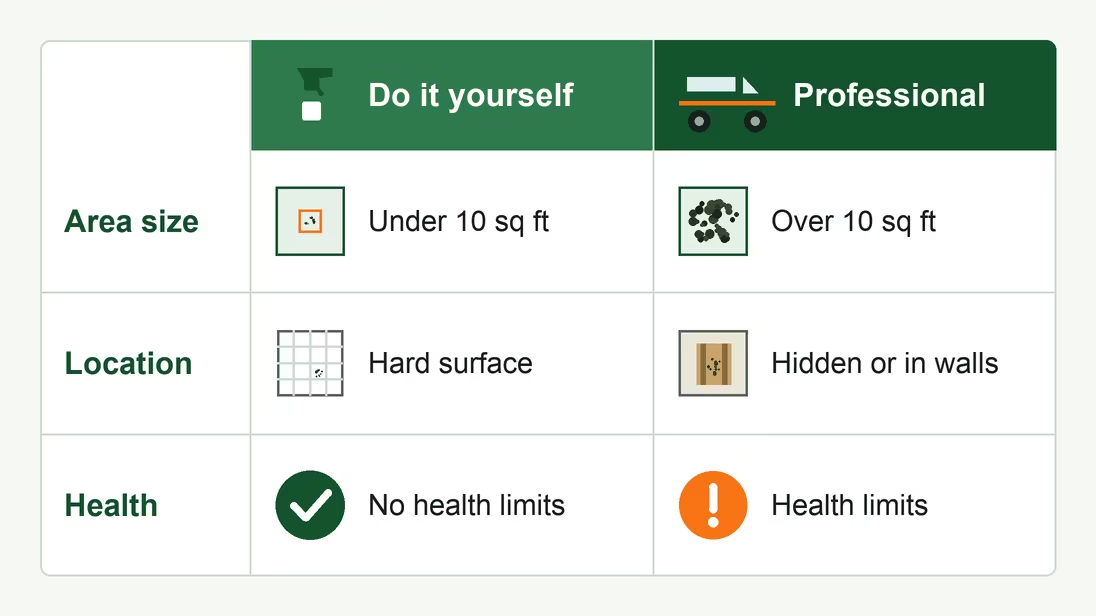
Yes, you can do mold remediation yourself when the growth covers less than about 10 square feet, EPA says. EPA describes that as roughly a 3 foot by 3 foot patch, a job most homeowners can handle. Growth past that size, mold you cannot see and water from sewage move the job to an independent local provider.
Doing it yourself still means fixing the water problem that fed the growth. Cleaning the visible patch without the water fix leaves the cause in the wall.
Source: EPA Mold Cleanup in Your Home (link) and EPA Brief Guide to Mold (link) (updated 2026-02-18), checked 2026-10-15.
The phrase DIY mold remediation has a narrower meaning than many readers expect.
What Does DIY Mold Remediation Mean?
DIY mold remediation is a homeowner cleaning a small moldy area and fixing its moisture source without hiring anyone. It covers scrubbing hard surfaces, discarding moldy porous items and drying the area, as EPA describes for small jobs. Larger areas fall under a separate EPA guide, Mold Remediation in Schools and Commercial Buildings, which EPA says fits other buildings too.
Handing the job over starts with choosing a mold remediation company in Orange and checking its license.
Whether the work is needed at all comes before who does it.
When Is Mold Remediation Required?
Mold remediation is required whenever mold is growing on materials inside a home, whatever the size of the patch. EPA calls moisture control the key to mold control, so every cleanup pairs removal with a water fix.
Source: EPA Brief Guide to Mold (link), checked 2026-10-15.
Three signs show that a home needs mold remediation.
- Visible growth on walls, ceilings, floors or stored belongings.
- A musty smell with no visible source, which EPA links to hidden mold.
- Wet materials left undried past the 24 to 48 hours EPA gives for drying.
Any one sign is enough to start, and the size of the growth decides who does the work.
A smell without a patch often leads to walls and ceilings with hidden growth behind the surface.
Some readers weigh whether the work pays off at all.
Is Mold Remediation Worth It?
Yes, mold remediation is worth it, because covering mold or leaving it wet does not stop it, according to EPA. EPA says paint applied over moldy surfaces is likely to peel. Porous items such as ceiling tiles and carpet may have to be thrown away once moldy, EPA notes. Removing the growth and drying its source is the step that ends the problem.
The size of the growth then decides who should do that work.
When Should I Call a Professional for Mold Remediation?
You should call a professional for mold remediation when growth passes about 10 square feet or EPA names a condition needing experience. Those conditions are hidden mold, moldy wallpaper, a contaminated HVAC system and water from sewage.
The table sorts each case by size, place and water source.
| If | Then | Call or do |
|---|---|---|
| Mold under about 10 square feet on a hard, dry surface | EPA says most homeowners can handle it | Do it yourself |
| Mold over about 10 square feet, or heavy water damage | EPA sends readers to its guide for larger areas | Call a provider |
| A moldy smell with no growth in sight | EPA says hidden mold may be present | Call a provider |
| Mold on the back of wallpaper | EPA warns removal can release a massive amount of spores | Call a provider |
| Mold known or suspected in the HVAC system | EPA says not to run the system | Call a provider |
| Damage from sewage or other contaminated water | EPA advises a professional experienced with contaminated water | Call a provider |
| Anyone in the home with health concerns | EPA advises a health professional before cleanup | Ask a health professional first |
Only the first row of the table stays a DIY job.
Health. CDC states that mold can cause severe reactions in people with asthma or a mold allergy. CDC lists lung infections as a risk for immune-compromised people and people with chronic lung disease. The note is general agency information and never a diagnosis. Anyone with symptoms should ask a doctor.
Source: EPA Mold Cleanup in Your Home (link), EPA Brief Guide to Mold (link) and CDC mold page (link) (2024-09-26), checked 2026-10-15.
Older homes in Orange add one more check before any scraping starts.
Can I Remove Mold Myself in an Older Orange, CA Home?
Yes, you can remove mold yourself in an older Orange, CA home, but old paint and building materials need a check first. EPA lead-safe rules cover renovation, repair and painting jobs that disturb lead-based paint in homes built before 1978. The CSLB asbestos guide says proper sampling and testing are needed to confirm asbestos. This site treats lead and asbestos work as outside DIY mold cleanup.
Source: EPA Lead Renovation, Repair and Painting Program Rules (link) (2025-12-15) and CSLB Consumer Guide to Asbestos (link) (2013 edition), checked 2026-10-15.
The local building picture is set out in housing age and mold risk in Orange homes.
Small jobs that pass these checks follow a short set of steps.
How Do I Do Mold Remediation Myself?
Do mold remediation yourself by fixing the water first, protecting yourself, scrubbing hard surfaces and drying everything fully. EPA gives these steps for patches under about 10 square feet.
Source: EPA Mold Cleanup in Your Home (link) and EPA Brief Guide to Mold (link) (updated 2026-02-18), checked 2026-10-15.
Work through the steps in this order.
- Fix. Repair the leak or other water problem before touching the mold.
- Protect. Put on an N-95 respirator, long gloves to mid-forearm and goggles without ventilation holes.
- Scrub. Clean mold off hard surfaces with detergent and water.
- Discard. Throw away porous items, such as ceiling tiles or carpet, that stay moldy.
- Dry. Dry the cleaned area completely, within 24 to 48 hours of any wetting.
- Wait to paint. Hold off painting or caulking until the surface is clean and dry.
Six steps finish a small job without outside help.
Fit and filter choices are covered in what agencies advise on respirators and PPE.
Bleach is the cleaner many readers reach for next.
Should I Use Bleach for DIY Mold Cleanup?
No, you should not use bleach as a routine fix, because EPA advises against it for mold cleanup. Detergent and water are what EPA names for hard surfaces. CDC caps any bleach mix at 1 cup of household laundry bleach in 1 gallon of water.
Fumes. EPA says never to combine chlorine bleach with any cleaner or detergent containing ammonia.
Source: CDC About Mold and Your Health (link) (dated 2024-09-26) and EPA Brief Guide to Mold (link) (updated 2026-02-18), checked 2026-10-15.
Vinegar and other options are compared under bleach, vinegar or household products.
Jobs past the DIY line go to a provider through one call.
What Happens When I Call About a Mold Job Past the DIY Line?
Calling the number on this page routes you to an independent local provider serving Orange, CA ZIPs 92865 to 92869. Have three facts ready: the size of the growth, the room it is in and the water that caused it. The provider on the call, not this site, sets the scope and the price of the work. This site states no hours or arrival times, so ask about timing on the call.
Orange Mold Remediation Help is a free referral service and does no mold work itself. Growth past the DIY line is when to call an independent local provider.
Call to be connected with an independent local provider (000) 000-0000Free referral service; independent contractors. Read the full disclaimer.
Is DIY or Professional Mold Removal Different in Orange County?
No, the EPA size line of about 10 square feet is federal guidance written for homes across the country. The number on this page covers Orange, CA ZIPs 92865 to 92869 only.
Do I Need a Professional for Mold?
Yes, when growth passes about 10 square feet, or for hidden mold, moldy wallpaper, a moldy HVAC system or sewage water. Smaller patches on hard surfaces are a homeowner job, according to EPA.
Call to be connected with an independent local provider (000) 000-0000Free referral service; independent contractors. Read the full disclaimer.