
How Orange, CA Homes and Their Age Shape Mold Risk and Mold Remediation
Check the age and type of a home in Orange, CA before a call about mold remediation there. Half of the city's housing units were built by 1973, the median year in the 2024 Census survey. Old Towne and the three Eichler tracts are historic districts with exterior design standards. An independent local provider reached through this free referral service handles the remediation work.
Call to be connected with an independent local provider (000) 000-0000Independent local providers. This site is a referral service.
This site is a free service to assist homeowners in connecting with local service contractors. All contractors are independent and this site does not warrant or guarantee any work performed. It is the responsibility of the homeowner to verify that the hired contractor furnishes the necessary license and insurance required for the work being performed. All persons depicted in a photo or video are actors or models and not contractors listed on this site.
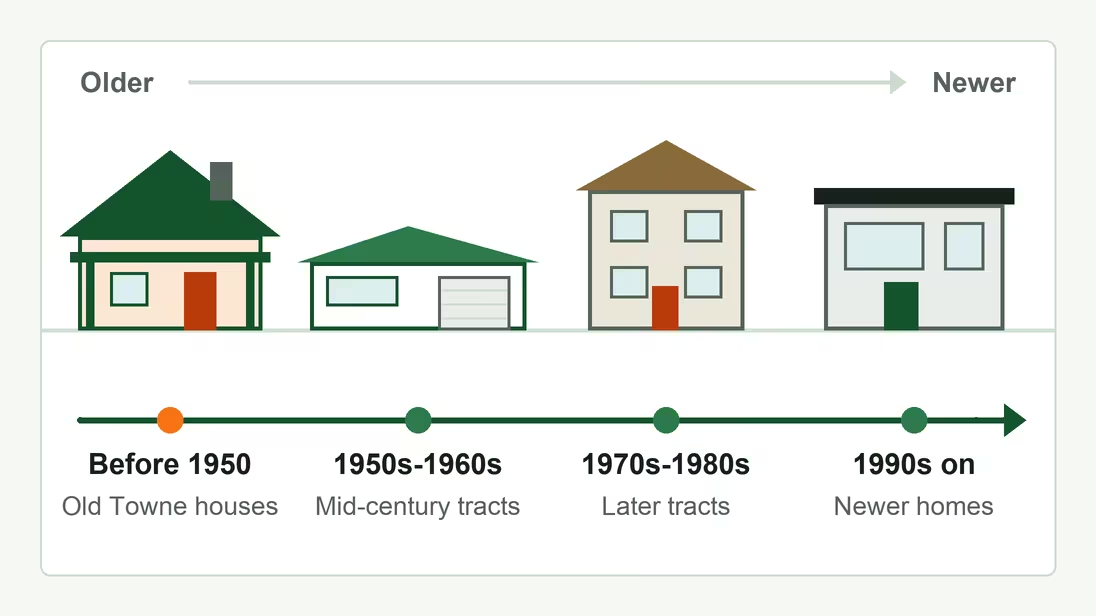
What Types of Homes Are Common in Orange, CA?
Detached single-family houses are the most common home type in Orange, CA, at 54.4 percent of housing units. Attached single-family homes add 10.9 percent, per the 2024 Census survey.
- Detached single-family houses
- 54.4 percent of housing units
- Attached single-family homes (townhome or condo row)
- 10.9 percent of housing units
- Buildings of 2 to 49 units
- 21.9 percent of housing units
- Buildings of 50 or more units
- 10.0 percent of housing units
Mobile homes make up the other 2.7 percent of the city's housing units.
Source: US Census Bureau, ACS 2024 1-year, table B25024, Orange city, California, 46,126 housing units (link), checked 2026-10-15.
The year those homes were built matters as much as their type.
How Old Are the Homes in Orange, CA?
The median home in Orange, CA was built in 1973, according to the 2024 American Community Survey. About 65 percent of the city's 46,126 housing units were built before 1980. Homes from the 1960s hold the most units in the survey estimate, at 26.2 percent. Only about 5 percent of units date from before 1950.
- Median year built
- 1973 (plus or minus 2 years)
- Built 2020 or later
- 2.4 percent
- Built in the 2010s
- 6.0 percent
- Built in the 2000s
- 5.8 percent
- Built in the 1990s
- 7.9 percent
- Built in the 1980s
- 13.4 percent
- Built in the 1970s
- 20.3 percent
- Built in the 1960s
- 26.2 percent
- Built in the 1950s
- 12.6 percent
- Built in the 1940s
- 1.2 percent
- Built 1939 or earlier
- 4.1 percent
Source: Census ACS 2024 1-year, tables B25035 and B25034 (link), checked 2026-10-15.
Source: Census ACS 2024 1-year estimates, 46,126 units plus or minus 2,530, median 1973 plus or minus 2 years (link), checked 2026-10-15.
The first steps for an older home are on what to do first in mold remediation in Orange.
Why Does a Home Built Before 1978 Change Mold Repairs in Orange, CA?
Paid work that disturbs painted surfaces in a home built before 1978 falls under the EPA lead renovation rule. EPA requires those workers to be trained in lead-safe work practices. Cutting out moldy painted drywall in an older Orange home disturbs old paint, so ask the provider about that rule.
Source: EPA, Lead Renovation, Repair and Painting Program, updated 2026-06-17 (link), checked 2026-10-15.
Old Towne holds the oldest homes in the city.
What Is Old Towne Orange?
Old Towne Orange is the historic core of the city, made of three overlapping historic districts. The Plaza Historic District joined the National Register of Historic Places in 1982. The Old Towne Orange Historic District followed on the National Register in 1997, and a local district is designated by City Council.
- Plaza Historic District
- National Register of Historic Places, 1982
- Old Towne Orange Historic District
- National Register of Historic Places, 1997
- Local Old Towne Historic District
- designated by City Council
Source: City of Orange, Planning Division, Historic Districts page (link), checked 2026-10-15.
Each of those districts carries design standards for the outside of a home.
Do Old Towne Design Standards Apply to Mold Repairs?
Yes, Old Towne design standards apply when a mold repair changes the exterior of a property. The City says any exterior change in Old Towne must comply with the Historic Preservation Design Standards for Old Towne. For siding, windows or roofing replaced after water damage, talk with Planning Division staff before the work starts.
Source: City of Orange, Planning Division, Historic Districts page (link) and Historic Preservation page (link), checked 2026-10-15.
A second set of standards covers the city's mid-century tracts.
Call to be connected with an independent local provider (000) 000-0000Free referral service; independent contractors. Read the full disclaimer.
Where Are the Eichler Homes in Orange, CA?
The Eichler homes in Orange, CA stand in three tracts, Fairhaven, Fairhills and Fairmeadow. The City designated those tracts as local historic districts in 2018 for their Mid-Century Modern design. Exterior projects on an Eichler home must follow the Orange Eichler Design Standards.
- Fairhaven
- local historic district, 2018
- Fairhills
- local historic district, 2018
- Fairmeadow
- local historic district, 2018
The boundaries of each tract are on the City Eichler Homes Historic Survey Maps.
Source: City of Orange, Planning Division, Historic Districts page (link), checked 2026-10-15.
Age and design matter to mold because of where water can hide.
How Does Housing Age Shape Mold Risk in an Orange, CA Home?
Housing age does not set mold risk on its own in an Orange, CA home; the moisture source does. EPA names no age at which a home becomes more prone to mold. EPA ties mold control to fixing plumbing leaks and other water problems as soon as possible. Mold behind drywall may stay out of sight until a wall is opened.
Source: EPA, A Brief Guide to Mold, Moisture and Your Home, updated 2026-02-18 (link), checked 2026-10-15.
A few more housing questions follow.
Call to be connected with an independent local provider (000) 000-0000Free referral service; independent contractors. Read the full disclaimer.
Call to be connected with an independent local provider (000) 000-0000Free referral service; independent contractors. Read the full disclaimer.