
Mold Remediation Process Steps in Order for Orange, CA Homes and Who Does Each
The mold remediation process runs in nine steps, from the first assessment of the growth to the final rebuild. The moisture source is fixed early, because mold comes back on materials that stay wet. Containment, removal, cleaning and drying follow, then a check against the EPA completion criteria. Homes in Orange, CA follow the same order, and an independent local provider does most of the steps.
Call to be connected with an independent local provider (000) 000-0000Independent local providers. This site is a referral service.
This site is a free service to assist homeowners in connecting with local service contractors. All contractors are independent and this site does not warrant or guarantee any work performed. It is the responsibility of the homeowner to verify that the hired contractor furnishes the necessary license and insurance required for the work being performed. All persons depicted in a photo or video are actors or models and not contractors listed on this site.
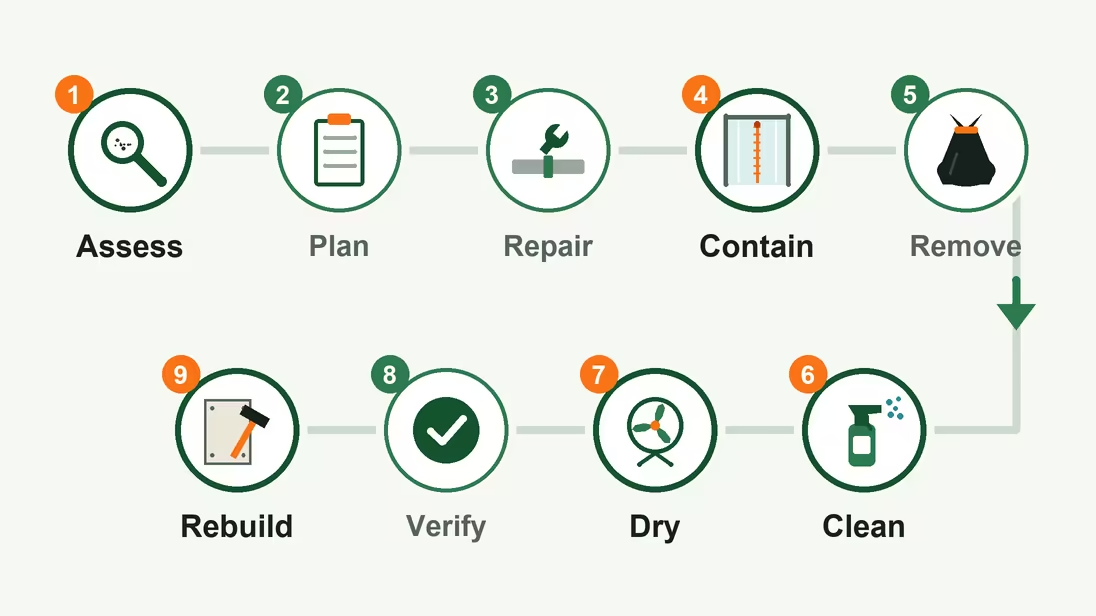
What Are the Steps of the Mold Remediation Process?
The mold remediation process is the ordered work that contains, removes and cleans indoor mold and fixes its moisture source. The process has nine steps, from assessment to rebuild. The order of the steps matters, because each step depends on the one before it.
In working order, the nine steps run as follows.
- Assess. Inspect the growth, measure its area and find the water or moisture source.
- Plan. Write down the containment level, the removal methods and the checks for the job.
- Repair. Fix the leak or humidity problem so the mold does not come back.
- Contain. Hang plastic sheeting and run negative air pressure to keep spores inside the work area.
- Remove. Cut out and bag moldy porous materials such as drywall, ceiling tiles and carpet.
- Clean. Scrub hard surfaces that stay in place with detergent and water.
- Dry. Dry materials and air until indoor humidity sits below 60 percent.
- Verify. Check the area for visible mold, moldy odor and any remaining moisture.
- Rebuild. Put in new drywall, flooring and paint only after the area is clean and dry.
EPA lists the same order in its remediation plan, with the moisture fix before cleanup.
Source: EPA remediation guide, chapter 3 (link), EPA Brief Guide to Mold and EPA mold course chapter 6, checked 2026-10-15.
Those nine steps rest on published guidance.
Which Guidelines Does the Mold Remediation Process Follow?
The mold remediation process follows EPA remediation guidance and the ANSI/IICRC S520 standard. Both are published rules for how the work is planned, contained and checked. EPA's guide sets containment and protective gear by the size of the moldy area.
ANSI/IICRC S520 is a procedural standard for mold remediation in residential, commercial and institutional buildings. Its current edition is the fourth, published in 2024. EPA advises hiring a contractor with mold cleanup experience who follows EPA or other professional guidelines.
Source: IICRC S520 public page (link) and EPA remediation guide chapter 5, Table 2, checked 2026-10-15.
Asking which guideline a provider follows belongs on the list of what to check in a mold remediation company.
Under both guidelines, the work starts with a written plan.
What Is a Mold Remediation Protocol?
A mold remediation protocol is the written plan for one job, set before the work starts. The protocol records the size of the growth, the moisture source and the containment level. The scope of work is the provider's list of tasks and materials that carries out the protocol.
A plan usually covers the six parts in this table.
| Plan part | What it records | Basis |
|---|---|---|
| Assessment | Area of growth and the damaged materials | EPA chapter 3 |
| Moisture source | The leak or humidity problem and its repair | EPA chapter 3 |
| Containment and gear | Containment level and worker protection for the area size | EPA Table 2 |
| Removal and cleaning | Which materials are cleaned and which are thrown away | EPA chapter 3 |
| Drying | Drying within 48 hours and checks for regrowth | EPA chapter 3 |
| Completion | The checks that end the job | EPA chapter 3 |
EPA advises revising the plan when hidden mold turns up during the work. A mold remediation report is the written record of what the plan said and what was done.
Source: EPA remediation guide, chapter 3 (link) and chapter 5, Table 2 (updated 2026-04-14), checked 2026-10-15.
Older homes add one more line to that plan.
Do Older Orange, CA Homes Change the Mold Remediation Plan?
Yes, an Orange, CA home built before 1978 brings lead paint rules into any paid work that disturbs paint. That comes from the EPA Renovation, Repair and Painting rule. Cutting out painted drywall during mold removal can disturb painted surfaces.
Asbestos cannot be identified by looking at a material, according to EPA. EPA advises having a trained, accredited professional sample suspect materials before remodeling.
Check first. Older materials are sampled before demolition, and asbestos or lead work is a separate trade.
Source: EPA Renovation, Repair and Painting Program (link) and EPA asbestos family page (updated 2026-06-25), checked 2026-10-15.
With the plan set, the household gets ready for the work.
How Do I Prepare My Home for Mold Remediation?
Prepare a home for mold remediation by clearing access to the work area and keeping people away from it. Preparation is the household's part of the job, done before containment goes up.
Five tasks get the home ready.
- Clear a path to the moldy area and move the furniture the provider asks about.
- Move papers, photos and small valuables out of rooms that will be sealed.
- Keep the HVAC system off when mold may be inside it, as EPA advises.
- Keep children, pets and people with asthma or allergies away from the work area.
- Leave the growth alone, because tearing out moldy materials releases spores.
Ask the provider on the call which rooms will be sealed and for how long. People with health concerns should consult a health professional before the work starts, EPA advises.
Source: EPA mold course, chapter 6 (link), EPA Brief Guide to Mold (link) and CDC mold page (dated 2024-09-26), checked 2026-10-15.
Whether the household stays during the work is answered in can you stay home during mold remediation, a separate guide.
Once the rooms are clear, the provider seals the work area.
How Is the Work Area Contained During Mold Remediation?
Containment is the sealing of the work area so mold spores do not spread to other rooms. EPA sets the containment level by the size of the moldy area.
The table matches each area size to its barrier and worker gear.
| Mold area | Containment | Built from | Worker gear |
|---|---|---|---|
| Under 10 square feet | None required | No sheeting | Gloves, N-95 respirator, goggles |
| 10 to 100 square feet | Limited | One layer of 6-mil polyethylene sheeting with a slit entry and flap | Respirator with P100 filters, disposable coveralls, gloves, goggles |
| Over 100 square feet | Full | Two layers of sheeting and a decontamination chamber | Full-body clothing and a full-face or powered respirator |
EPA leaves the final level to professional judgment, weighing the exposure risk as well as the size of the area. An exhaust fan vented outdoors keeps the contained area under negative pressure. Sheeting that bulges inward shows the containment is working.
Source: EPA remediation guide, chapter 5, Table 2 (link) and EPA mold course chapter 6, checked 2026-10-15.
The build of each barrier is set out in mold containment for sealed work areas.
Each containment level relies on a few pieces of equipment.
Which Equipment Does Mold Remediation Use?
Mold remediation equipment is the gear that seals the area, moves air outdoors and protects workers.
EPA guidance names the four pieces below.
| Equipment | What it does | When used |
|---|---|---|
| Polyethylene sheeting | Walls off the work area | Limited and full containment |
| Exhaust fan vented outdoors | Holds the area under negative pressure | Inside containment |
| Decontamination chamber | Lets workers change gear and move waste out | Full containment |
| NIOSH-approved respirator | Filters spores from the air a worker breathes | Every job size |
The size of the job decides how much of this equipment comes to the home.
Source: EPA mold course, chapter 6 (link), updated 2025-12-01, checked 2026-10-15.
Each machine and its use are described in tools used on a mold remediation job.
With the area sealed, removal begins.
How Are Moldy Materials Removed and Cleaned?
Removal is the step where moldy materials leave the home, and cleaning treats the surfaces that stay. Porous materials with mold are usually thrown away, while hard surfaces are scrubbed and dried.
Handling depends on the kind of material.
| Material | Examples | How it is handled |
|---|---|---|
| Absorbent | Ceiling tiles, carpet, drywall | Often cut out, bagged and thrown away |
| Hard surfaces | Metal, glass, hard plastic | Scrubbed with detergent and water, then dried |
| Surfaces to be refinished | Walls and trim due for paint or caulk | Painted or caulked only after cleaning and drying |
CDC says the type of mold does not change the need to remove it.
Source: EPA Brief Guide to Mold, Moisture and Your Home (link) and CDC mold page (dated 2024-09-26), checked 2026-10-15.
A surface-by-surface guide shows which surfaces get which mold cleaning method.
Some homeowners ask whether a spray can replace that removal.
Do Antimicrobials or Fogging Replace Mold Removal?
No, antimicrobials and fogging do not replace the physical removal of mold. EPA does not recommend routine use of biocides in mold cleanup. Dead mold can still cause allergic reactions, so the material itself has to leave.
Source: EPA mold course, chapter 6 (link), updated 2025-12-01, checked 2026-10-15.
Their limited uses on a job are explained in what antimicrobials and fogging do.
After removal and cleaning, the remaining materials must dry.
Why Is Drying Part of Mold Remediation?
Drying is part of mold remediation because mold returns when the moisture problem stays. It removes the water left in materials and air after mold removal. EPA sets a 24 to 48 hour drying window for wet materials to keep mold from starting.
Four checks guide the drying.
- The leak or humidity source is fixed before drying starts.
- Indoor relative humidity is brought below 60 percent, ideally 30 to 50 percent.
- Materials are dry before any paint or caulk goes on.
- The area is checked again for new water damage or growth.
No single drying time fits every job, because wall cavities and slabs dry at different rates.
Source: EPA Brief Guide to Mold, Moisture and Your Home (link) and EPA remediation guide chapter 3, checked 2026-10-15.
Day counts for each stage are covered in how long does mold remediation take, a separate guide.
Dry materials are then checked against the end criteria.
How Is the End of Mold Remediation Checked?
Verification is the check that shows the remediation met its goals before rebuilding starts. EPA lists five signs that remediation is complete, and calls the final decision a judgment call.
These are the five EPA signs.
- The water or moisture problem is completely fixed.
- No visible mold, mold-damaged materials or moldy odors remain.
- Where sampling was done, the mold kinds and levels are similar to outdoor air.
- A revisit soon after shows no new water damage or mold growth.
- People use the space without health complaints, according to EPA.
CDC does not recommend mold testing, so sampling is a plan decision, not a default.
Source: EPA remediation guide, chapter 3 (link) and CDC mold page (dated 2024-09-26), checked 2026-10-15.
Air and surface sampling after the work is explained in how mold clearance testing works.
A passed check opens the last step.
What Happens After Mold Remediation Is Finished?
Rebuilding is the last step, when removed drywall, flooring and finishes are put back. It starts only after the area passes its checks and is clean and dry. EPA says moldy surfaces are not painted or caulked until they are cleaned and dried.
California requires a contractor license for most construction work of 1,000 dollars or more, labor and materials together.
Source: EPA Brief Guide to Mold (link) and California Business and Professions Code section 7048, checked 2026-10-15.
Coatings are a separate decision, set out in when encapsulation and sealants apply.
Each of these steps has an owner.
Who Does Each Step of Mold Remediation?
An independent local provider does most steps of mold remediation, from containment to drying. Other trades handle the leak repair and, on some jobs, the testing and rebuilding.
The table pairs each step with its usual owner and a question to ask.
| Step | Who usually does it | Question to ask |
|---|---|---|
| Assessment and plan | The remediation provider, or an indoor environmental professional on some jobs | Who writes the plan? |
| Moisture repair | The trade that fits the leak, such as plumbing or roofing | Is the source fixed before removal? |
| Containment, removal, cleaning | The remediation provider | Which containment level fits this area? |
| Drying | The remediation provider | Which humidity reading ends drying? |
| Verification | The provider, or a separate assessor the plan names | Who checks the result? |
| Rebuild | A licensed contractor | Is rebuilding in the same scope of work? |
The IICRC S520 topic list names remediator qualifications and the indoor environmental professional as separate subjects.
Calling the number on this page reaches an independent local provider who serves Orange, CA homes. This site is a free referral service and does none of these steps itself.
Source: EPA remediation guide, chapter 3 (link) and IICRC S520 public page, checked 2026-10-15.
Call to be connected with an independent local provider (000) 000-0000Free referral service; independent contractors. Read the full disclaimer.
How Long After Mold Remediation Can You Move In?
You can move back in once the provider confirms that the final checks in the plan are done. EPA ties the end of a remediation job to its completion checks.
Is There a Mold Remediation Checklist?
Yes, the nine steps on this page work as a checklist, from assessment to rebuild.
Do I Need Mold Remediation After Water Damage?
No, unless the water damage stays wet past 24 to 48 hours, the drying window EPA gives to prevent mold growth. Growth that does appear is sized and handled like any other mold job.
The steps stay the same, but a few things change them from home to home.
Call to be connected with an independent local provider (000) 000-0000Free referral service; independent contractors. Read the full disclaimer.