
Does Homeowners Insurance Cover Mold Remediation in Orange, CA Under California Policies?
No, unless a covered peril caused the mold, homeowners insurance does not pay for mold remediation in Orange, CA. The California Department of Insurance says mold damage caused by a covered peril may be covered. Its homeowners guide lists mold, flood, and wear and tear among the perils usually excluded. Check the 4 cases below against your own policy, then call to reach an independent local provider.
Call to be connected with an independent local provider (000) 000-0000Independent local providers. This site is a referral service.
This site is a free service to assist homeowners in connecting with local service contractors. All contractors are independent and this site does not warrant or guarantee any work performed. It is the responsibility of the homeowner to verify that the hired contractor furnishes the necessary license and insurance required for the work being performed. All persons depicted in a photo or video are actors or models and not contractors listed on this site.
Does Homeowners Insurance Cover Mold Remediation?
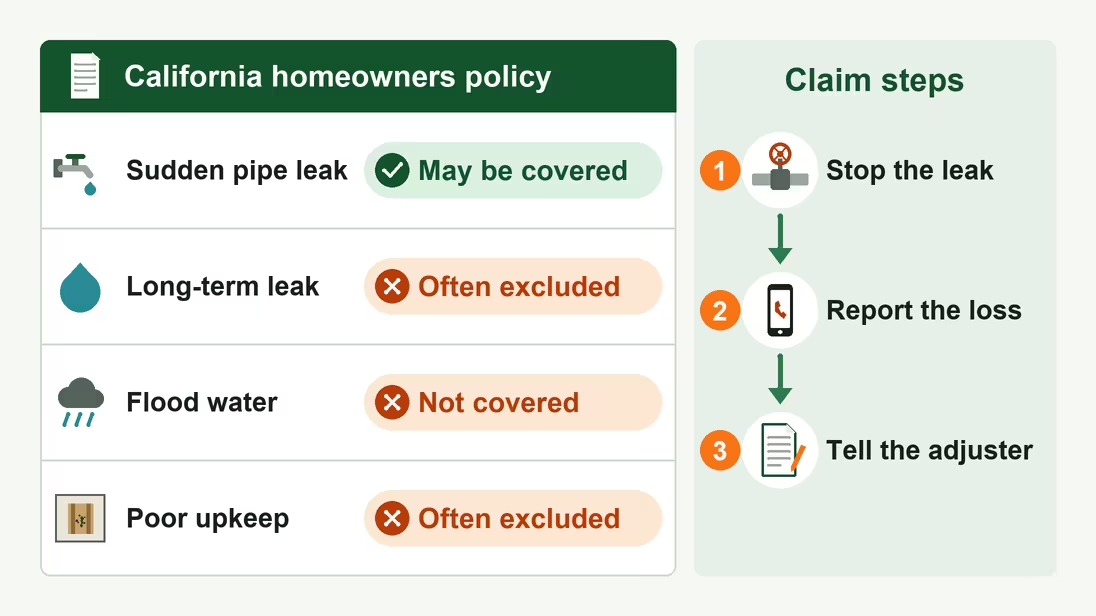
No, unless a covered peril caused the mold, because the cause decides whether a homeowners policy pays. A covered peril is an event the policy lists as covered, such as sudden and accidental water damage. A policy may cover mold damage that a covered peril caused, per the claims guide of the state Department of Insurance.
The 4 cases below show how the cause of mold changes the coverage answer.
| If | Then | Call or do |
|---|---|---|
| Sudden and accidental water damage, then mold | Mold damage caused by a covered peril may be covered (Form 405) | Report the water damage to your agent or insurer right away. |
| A long-term leak, wear and tear or poor maintenance | Usually excluded: Form 401 lists wear and tear or maintenance, and mold, among perils generally not covered | Read the exclusions in your policy. |
| Flood water | Homeowners policies do not cover flood damage (Form 405); flood cover is a separate policy | Check for a separate flood policy and read its terms. |
| The policy has a mold limit or an endorsement | The policy text sets what is paid; an endorsement adds or subtracts coverage (Form 401 glossary) | Read the declarations and endorsements, or ask your agent or broker. |
Each row is general information, and your own policy wording decides the claim.
Source: California Department of Insurance, Residential Property Claims Guide, Form 405, revised 2025-02-28, checked 2026-10-15.
Source: California Department of Insurance, Residential Insurance: Homeowners and Renters, Form 401, revised January 2026, checked 2026-10-15.
The regulator sets out these rules in its consumer guides.
What Does the California Department of Insurance Say About Mold Claims?
The California Department of Insurance is the state agency that publishes consumer guides on homeowners claims. Its claims guide, Form 405, ties mold coverage to the cause of the water damage. The two guides cover 4 points for a mold claim.
The card below sets out the 4 points.
- Covered peril
- Mold damage caused by a covered peril may be covered under a homeowners policy (Form 405).
- Usually excluded
- Earthquake, flood, mold, earth movement, and wear and tear (Form 401).
- Mold after a leak
- Contact the claims adjuster immediately when mold is suspected after a water leak (Form 405).
- Mold after a long-term leak
- Mold may already exist, and trying to clean it up may spread spores (Form 405).
The guides speak to the claim, while the work itself is set out on mold remediation in Orange, CA.
Source: California Department of Insurance, Form 405 (link), revised 2025-02-28, and Form 401 (link), revised January 2026, checked 2026-10-15.
Each of these points leads back to the wording of your own policy.
Where Does a California Homeowners Policy State Its Mold Terms?
A policy states its mold terms in the exclusions, the coverage limits, the endorsements and the declarations. The Department says there is no substitute for reading your policy and your renewal declarations carefully.
Five parts of a policy matter when you read it for mold.
- Exclusions, the perils the policy does not cover, which usually include mold.
- Covered perils, such as sudden and accidental water damage.
- Limits, the most the policy pays for each type of coverage.
- Endorsements, the written agreements that add or subtract coverage.
- Renewal declarations, which the Department tells homeowners to read with the policy.
Questions about any of these parts go to your agent, broker or insurer.
Source: California Department of Insurance, Residential Insurance: Homeowners and Renters, Form 401, revised January 2026, checked 2026-10-15.
The claims guide says flood is not covered by a homeowners policy.
Does Homeowners Insurance Cover Mold After a Flood?
No, the California Department of Insurance states that homeowners policies do not cover flood damage. Flood insurance is a separate policy, bought in addition to a homeowners policy. The text of the flood policy decides whether it covers mold.
How fast growth starts once water gets in is covered on mold after a flood.
Source: California Department of Insurance, Residential Property Claims Guide, Form 405 (link), revised 2025-02-28, checked 2026-10-15.
A covered water loss starts with the claim steps.
How Do You File a Mold Insurance Claim in California?
Report the water and mold damage to your agent or insurer right away to file a mold insurance claim in California. A mold insurance claim is a report of water and mold damage to your insurer under your homeowners policy. The claims guide of the Department advises 6 actions after water damage.
The steps below set out all 6 actions.
- Stop the leak. Find and stop the leak at its source as soon as possible.
- Report the loss. Report the water damage to your agent or insurer right away.
- Tell the adjuster about mold. Call your claims adjuster at once when you suspect mold after a leak.
- Dry the area. Dry wet areas with good air flow and dehumidifiers to limit mold growth.
- Document the damage. Take photos, list damaged items and keep a log of calls and letters.
- Hold permanent repairs. Keep receipts for reasonable protection costs and wait for the adjuster before extensive permanent repairs.
Each step leaves a record the adjuster can check.
The first 48 hours in an Orange, CA home are set out step by step on the emergency page.
Source: California Department of Insurance, Residential Property Claims Guide, Form 405 (link), revised 2025-02-28, checked 2026-10-15.
A claim can go wrong on a few common assumptions.
Call to be connected with an independent local provider (000) 000-0000Free referral service; independent contractors. Read the full disclaimer.
What Should a Homeowner Not Assume About Mold Coverage?
A homeowner should not assume a policy covers mold until the policy text confirms it. A coverage assumption is a belief about the policy that the policy text has not confirmed. The Department guides contradict four common assumptions.
The list below names each one.
- Every mold job is covered, yet the homeowners guide lists mold among perils usually excluded.
- A homeowners policy pays for flood damage, though the claims guide says it does not.
- Mold from a long-term leak is simple to clean up, but the claims guide says cleanup may spread the spores.
- Permanent repairs can start at once, yet the claims guide says to wait for the adjuster.
The claims guide says mold testing and cleanup should start as soon as mold is detected. For visible mold growth, EPA treats sampling as unnecessary in most cases.
General information. This page is not insurance or legal advice, and your insurer decides the claim.
Source: California Department of Insurance, Form 401 and Form 405; EPA Brief Guide to Mold; checked 2026-10-15.
Coverage questions sit beside the cost of the work.
How Does an Insurance Claim Fit the Cost of Mold Remediation?
The cost of mold remediation is set by the written scope, and the claim decides which part the insurer pays. The limits in your own policy set the most the insurer pays for a covered loss. Payments for temporary repairs count toward the total loss settlement, per the claims guide from the Department. Price ranges and their basis are set out on mold remediation cost in Orange.
Source: California Department of Insurance, Form 401 (link), revised January 2026, and Form 405 (link), revised 2025-02-28, checked 2026-10-15.
A few short questions about claims remain.
Call to be connected with an independent local provider (000) 000-0000Free referral service; independent contractors. Read the full disclaimer.
What Are Common Questions About Mold Insurance Claims?
Two questions homeowners ask about mold claims are answered below.
Should I Tell My Insurance Company About Mold?
Yes, you should contact your claims adjuster right away when you suspect mold after a water leak. That advice comes from Form 405, the claims guide from the Department.
Can I Claim on House Insurance for Mold?
Yes, you can file a claim, and the claim turns on whether a covered peril caused the mold damage. The guide says the policyholder must report the loss to the insurer. The written scope from the provider can support the claim once it is filed.
Source: California Department of Insurance, Residential Property Claims Guide, Form 405, revised 2025-02-28, checked 2026-10-15.
Beyond the claim, a few related questions decide who pays in the end.
Call to be connected with an independent local provider (000) 000-0000Free referral service; independent contractors. Read the full disclaimer.