
Emergency Mold Remediation in an Orange, CA Home, from the First Hour to the First 48 Hours and When to Call a Provider
EPA allows 24 to 48 hours to dry wet drywall, carpet and furniture before mold growth can begin. Emergency mold remediation in Orange, CA is mold remediation that starts while water still feeds the growth. The work stops the moisture source, contains the affected area and removes damaged materials. The number on this page connects callers in ZIPs 92865 to 92869 with an independent local provider.
Call to be connected with an independent local provider (000) 000-0000Independent local providers. This site is a referral service.
This site is a free service to assist homeowners in connecting with local service contractors. All contractors are independent and this site does not warrant or guarantee any work performed. It is the responsibility of the homeowner to verify that the hired contractor furnishes the necessary license and insurance required for the work being performed. All persons depicted in a photo or video are actors or models and not contractors listed on this site.
What Is Emergency Mold Remediation?
Emergency mold remediation is mold remediation that starts while water is still feeding the growth. It means stopping the moisture source, limiting disturbance and drying wet materials before the mold is removed. The urgency of emergency mold remediation comes from the water, not from the colour of the mold.
EPA describes mold remediation as cleaning up mold and fixing the moisture problem while protecting occupants and workers. Emergency mold remediation in Orange, CA follows those same EPA steps, started sooner.
Is Mold an Emergency?
Yes, mold is an emergency while water still feeds it, because EPA says wet areas need drying within 24 to 48 hours. A dry patch smaller than about 10 square feet is a job most homeowners can handle, according to EPA.
Five signs make a mold problem urgent.
- Active water
- A leak, burst pipe or standing water is still wetting building materials.
- Size
- The growth covers more than about 10 square feet, the line where EPA points to its professional guidance.
- Air system
- Mold is known or suspected inside the HVAC system, which EPA says not to run.
- Water type
- Sewage or other contaminated water caused the damage, a case EPA leaves to experienced professionals.
- People in the home
- Someone has asthma, a mold allergy, a weakened immune system or chronic lung disease.
Each sign on the card comes from EPA or CDC guidance on when faster or professional action is needed.
Source: EPA, A Brief Guide to Mold, Moisture and Your Home (link) and CDC, Mold (link), checked 2026-10-15.
An urgent job needs a contractor with mold experience, and the guide to choosing a mold remediation company covers what to verify. The first hour is when the water source gets stopped.
What Should I Do in the First Hour After Finding Mold?
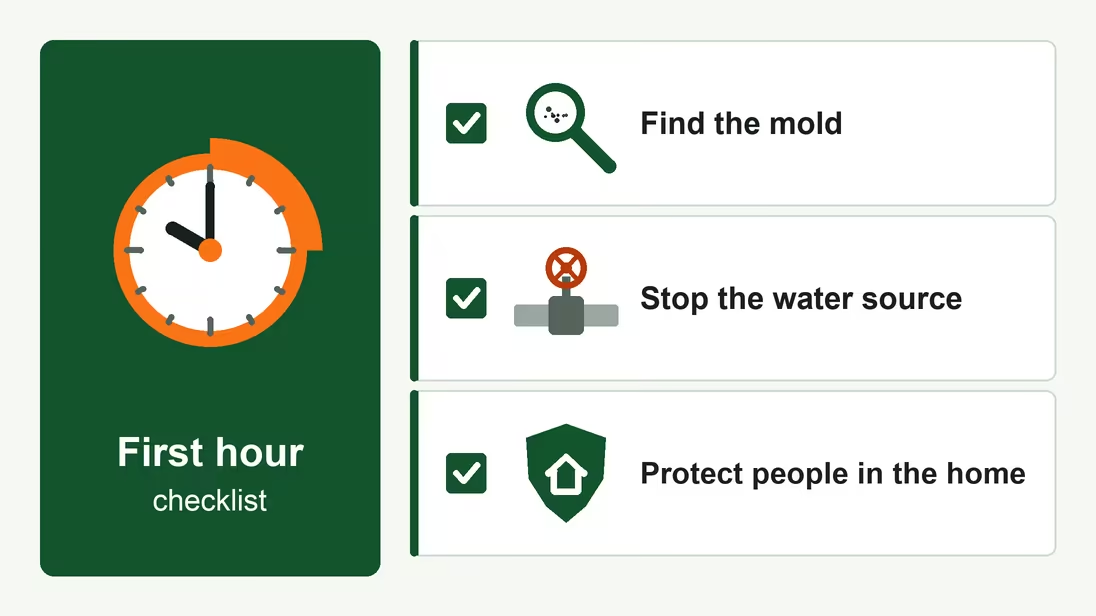
You should stop the water first and then keep people and moving air away from the mold. The first hour after finding mold is the time to limit how far the moisture and the spores travel.
Six steps cover the first hour.
- Shut off the water at the fixture valve or the main while a leak is still running.
- Turn off the HVAC system when mold is known or suspected inside it.
- Keep people with asthma, allergies or weakened immunity away from the area.
- Leave the growth undisturbed, because EPA says peeling moldy wallpaper can release a large amount of spores.
- Keep receipts for tarps, fans or other temporary protection bought for the damage.
- Call an independent local provider when a sign from the urgency card applies.
These six steps hold the damage in place until the remediation work begins. Keeping sensitive people out is the next part of the first hour.
Who Should Stay Away from a Moldy Area?
People with asthma, a mold allergy, a weakened immune system or chronic lung disease should stay away from a moldy area. CDC says people with asthma or a mold allergy may have severe reactions to mold. Immune-compromised people and people with chronic lung disease may get lung infections from mold, according to CDC. For other people, CDC lists a stuffy nose, sore throat, coughing, wheezing, burning eyes or skin rash.
Health. EPA advises anyone with health concerns to consult a health professional before starting cleanup. This page gives general agency information, not medical advice.
Keeping people out buys time for the drying that EPA times at 24 to 48 hours.
What Needs to Happen in the First 48 Hours?
The first 48 hours after water damage close the 24 to 48 hour drying window EPA gives to prevent mold growth. CDC gives the same 24 to 48 hours for drying a home fully after a flood.
Five steps cover the first 48 hours, in time order.
- Stop. Stop the water source within the first hour.
- Dry. Dry wet materials and contents within 24 to 48 hours.
- Protect. Make temporary repairs that prevent further damage, as the California Department of Insurance guide advises.
- Report. Report the water damage to the insurer and keep a log of every call and letter.
- Assess. Have a provider with mold experience assess growth over about 10 square feet or hidden behind surfaces.
Drying inside this window is the step EPA ties to preventing new growth.
Source: EPA Brief Guide (link), CDC Mold (link) and CDI Claims Guide (link), checked 2026-10-15.
The growth timeline after a water event is covered in how fast mold grows after a leak.
Some common reactions in these hours make the job larger.
What Should I Not Do While Waiting for Mold Help?
You should not disturb, cover or blow air across mold while waiting for help. Each of these actions spreads spores or hides the moisture problem from the provider.
The table below gives the reason and the source for each action to avoid.
| Do not | Why | Source |
|---|---|---|
| Run the HVAC system with mold inside it | It can spread mold through the building | EPA |
| Paint or caulk over moldy surfaces | The mold and the moisture stay in place underneath | EPA |
| Peel moldy wallpaper or scrape growth | It can release a large amount of spores | EPA |
| Mix bleach with cleaners that contain ammonia | The mix gives off dangerous fumes | EPA |
| Make extensive permanent repairs before the adjuster visits | The insurer may need to see the damage first | California Department of Insurance |
The provider on the call confirms which of these points apply to the home. Some jobs need a provider from the start.
When Should I Call a Mold Remediation Provider?
You should call a mold remediation provider when growth covers more than about 10 square feet or water is still active. EPA says most homeowners can clean a patch smaller than about 10 square feet themselves. Hidden mold, contaminated water and a suspected HVAC problem point to a provider, according to EPA.
The table below sets out what to do in each situation.
| If | Then | Call or do |
|---|---|---|
| Growth under about 10 square feet, dry, nobody sensitive in the home | Clean it following EPA guidance with gloves and goggles | Do it yourself |
| Growth over about 10 square feet | EPA points to its professional remediation guidance | Call a provider |
| Mold known or suspected in the HVAC system | Keep the system off | Call a provider |
| Damage from sewage or contaminated water | Keep everyone out of the area | Call a provider |
| Musty smell or stains with no visible growth | A sign of mold behind a surface | Call a provider |
| Someone in the home has health concerns | Consult a health professional before cleanup | Call a provider |
Five of the six situations end with a call to a provider.
Source: EPA, A Brief Guide to Mold, Moisture and Your Home (link), checked 2026-10-15.
The full comparison of DIY or professional mold remediation has its own guide.
Callers in Orange, CA reach that provider through the number on this page.
Is There Emergency Mold Remediation in Orange, CA?
Yes, the number on this page connects callers in Orange, CA with an independent local provider. Calls from the street ZIPs 92865, 92866, 92867, 92868 and 92869 are routed to that provider. This site states no hours or arrival times, so ask the provider on the call when the work starts. The City of Orange Water Division lists a 24-hour line for water main and meter leaks.
A hidden leak behind the growth is traced with water meter checks for hidden leaks.
A few facts make that first call shorter.
What Should I Have Ready Before I Call About Mold?
You should have five facts ready before you call about mold. These facts let the provider judge how urgent the job is.
Have these ready when you call.
- The room and the surface where the mold is.
- The size of the growth in square feet, measured against the 10-square-foot line.
- The water source and whether it is stopped.
- The day the water or the growth was first noticed.
- Anyone in the home with asthma, allergies or a weakened immune system.
Photos of the growth and the water source help on the same call.
Call to be connected with an independent local provider (000) 000-0000Free referral service; independent contractors. Read the full disclaimer.
Does Emergency Mold Remediation Include Prevention?
Yes, EPA pairs mold cleanup with fixing the water problem that caused it.
Is Urgent Mold Removal the Same as Mold Remediation?
No, EPA describes remediation as cleanup plus fixing the moisture problem. Removing visible growth alone leaves the moisture in place.
Call to be connected with an independent local provider (000) 000-0000Free referral service; independent contractors. Read the full disclaimer.